That Salsa Macha Will Run You $22: Inside LA's Fridge-Door Economy
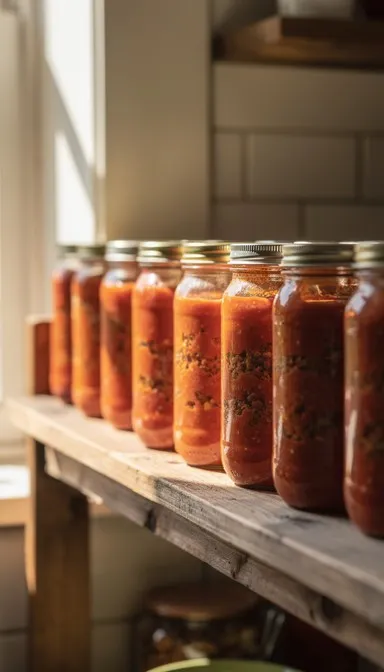
Photo: restaurant housemade chili sauce jars retail shelf, via images.stockcake.com
There's a moment happening at registers all over Los Angeles, and if you've eaten out recently, you've probably lived it. You finish your meal, the check arrives, and next to it — or next to the register, or in a little refrigerated case by the host stand — sits a row of jars. Salsa macha in a squat 8-ounce vessel. Chili crisp with a handwritten label. A yakitori glaze so glossy it looks like it should cost more than the chicken it came with.
And it might. Because these jars are running $15 to $30 a pop, which, depending on where you're eating, is more than the plate they accompanied.
The question I keep coming back to: when did the condiment become the product?
From Tableside Extra to Revenue Stream
The logic isn't hard to trace. Restaurant margins are brutal — rent, labor, produce — and a jar of sauce is one of the few things a kitchen can make in bulk, on a slow Tuesday, with ingredients it already buys. Unlike a catering order or a merch drop, it requires no new skills. The salsa macha that takes your server's tortillas from good to memorable? That recipe already exists. It's just sitting in a squeeze bottle doing nothing for the bottom line.
So kitchens started bottling. First as giveaways, then as add-ons, now as genuine lines of business. I've watched a jar go from "we'll sell these if people want them" to a dedicated retail shelf in under a year at more than one spot. Some kitchens are now producing sauces weekly in quantities that rival their prep for actual service.
And honestly? Smart. If I love a place enough to crave its chile oil on a random Wednesday, I'd rather hand them $20 than try to reverse-engineer it from memory.
But Does the Jar Taste Like the Restaurant?
This is where it gets complicated, because I bought a bunch of them and ran an extremely unscientific taste test at home: jar versus memory of the table.
The salsa machas held up best. Toasty, oily, nutty, with that slow-building heat — the format suits them. Salsa macha is basically a shelf-stable product by nature. Same with most chili crisps; the good ones from LA kitchens compete with anything you'd import, and the best have a fresher allium punch than the mass-market stuff.
The glazes are trickier. A yakitori tare straight from the jar tastes... fine. Good, even. But part of what makes it sing at the restaurant is the char, the smoke, the fact that it's lacquered onto something hot off the grill ten feet from your table. At home, you're brushing it on supermarket chicken thighs under a broiler, and no $24 jar can close that gap.
Which leads to the real insight: these sauces aren't really selling flavor. They're selling access. A jar in your fridge is a standing invitation — a reminder that the restaurant exists, that the meal happened, that it can happen again.
The Fridge Door Is the New Loyalty Program
Here's what I didn't expect: how much these jars change my behavior.
Every time I open the fridge and see that label, I think about the restaurant. When friends come over and ask "where'd you get this?", I'm doing free marketing with a spoon. And when I'm deciding where to eat Friday night, the kitchen whose sauce I've been eating all week has an unfair advantage. It's brand loyalty in the most literal sense — the brand lives in my house now.
Restaurants figured this out fast. Some are printing social handles on labels. A few are doing rotating seasonal sauces, which turns the retail case into a reason to visit the restaurant itself. One spot I know treats the jar line as a pipeline: buy the sauce, eventually book a table, become a regular. It's a longer, slower, smarter version of the punch card.
A Few Rules for Buying In
After a month of this, my advice:
- Buy what's shelf-stable by design. Salsas macha, chili crisps, infused oils — these travel well and taste right at home.
- Be skeptical of anything that's really a dish. If the sauce's magic depends on restaurant equipment or service temperature, the jar is a souvenir, not a substitute.
- Check the price per ounce against the meal. Some of these are fairly priced for the labor. Some are vanity pricing with a nice label. You'll know which is which after the second jar.
- Use it beyond the intended cuisine. The best test of a house sauce is whether it earns a permanent spot on your eggs, your rice, your leftover pizza. If it does, the $22 stings less.
The Bottom of the Jar
I'll admit I was ready to be cynical about this whole trend. Another upcharge! Another way to monetize the meal!
But standing at my counter, spooning someone's salsa macha onto eggs on a Sunday morning, I don't feel ripped off. I feel connected to a kitchen across town that I might otherwise visit twice a year. The jar cost more than the meal once, sure. But the meal keeps going.
That's a better deal than it sounds.


